Hidden History by Joram Van Klaveren
explores centuries of intertwined Islamic history in the West through 30 short stories
Hidden History: 30 Stories of Islam’s Connections with the West
A reader-friendly overview of Joram van Klaveren’s Vergeten Verleden
Editorial note: This is an independent, topic-level overview based on the story titles and general historical context—not a substitute for the full chapters. Some titles make bold historical claims. Those claims should be checked against the book’s evidence and reputable specialist sources before being repeated as established fact.
Introduction
Islamic history and Western history have never been entirely separate. Across centuries, people, ideas, technologies, trade routes, wars, migrations, and religious encounters have connected Muslim societies with Europe and the Americas. In Hidden History, Joram van Klaveren uses 30 short stories to draw attention to connections that may be unfamiliar to many readers.
The stories range from the Dutch revolt and Ottoman diplomacy to the legacy of al-Andalus, the intellectual work of Ibn Khaldun, and the life of boxer Muhammad Ali. Some concern well-documented historical figures and exchanges; others advance provocative interpretations that deserve closer examination.
The 30 stories
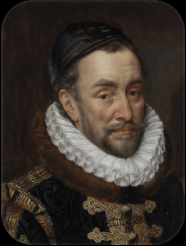
William of Orange
1. The Founding of the Netherlands: Islamic DNA
Van Klaveren argues that Islamic history is woven into the origins of the Netherlands, despite modern political claims that the country’s heritage is exclusively Jewish-Christian.
He explains that William of Orange, a central figure in the Dutch revolt against Spanish rule, sought support from the Ottoman Empire. Spain’s King Philip II was determined to suppress Protstantism in his territories, and the Dutch resistance needed powerful allies against the Spanish military. According to van Klaveren, the Ottomans helped by intensifying their military campaigns against Spain in the Mediterranean, diverting Spanish resources and helping the Dutch cause.
The interview also highlights the expression associated with the liberation of Leiden in 1574: “Rather Turkish than papist.” Williams and van Klaveren discuss how this reflected the willingness of some Dutch Protestants to identify with the Ottoman Muslims rather than the Catholic Spanish authorities persecuting them.
For van Klaveren, this history challenges the notion that Islam has always been alien to the Netherlands. He argues that Ottoman support helped shape the country's emergence as an independent state.
Central message: The history of the Netherlands cannot be fully understood without acknowledging its historical connections with the Muslim world.
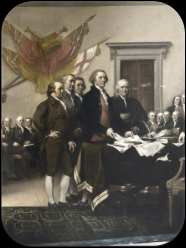
Islam and the early United States
2. Islam: One of America’s Pillars
In this chapter, van Klaveren points to the artwork The Evolution of Civilization, painted by Edwin Blashfield for the dome of the Library of Congress in Washington, DC. The work depicts different civilisations and intellectual traditions that contributed to human progress, including Islam.
Williams and van Klaveren emphasise the significance of Islam's inclusion among these traditions. They discuss how the painting associates Islamic civilisation with lawgiving, challenging the modern portrayal of Islam as inherently opposed to intellectual development, scientific progress or modernity.
The story is particularly striking because the United States is frequently presented as a defining example of Western civilisation. Van Klaveren uses the artwork to argue that Islamic contributions have been acknowledged within major Western cultural institutions, even if they are less familiar in contemporary political discussions.
Central message: Islamic civilisation has been recognised as a contributor to the intellectual and cultural foundations of the West, including in the United States.
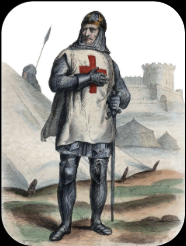
Conversion and identity during the Crusades
3. A Crusader Becomes Muslim
Van Klaveren recounts the story of Robert of St Albans, an English crusader who, according to the historical accounts he discusses, converted to Islam during the Crusades.
Born around 1160, Robert was described in the interview as a Templar knight who fought to secure Christian access to the Holy Land. During a battle, he was wounded and captured by Muslim forces. Rather than being killed, he was treated while he recovered.
During his captivity, Robert heard the Islamic call to prayer and became interested in the religion. He reportedly asked questions, encountered Saladin, the Muslim ruler celebrated for his role in the Crusades, and eventually embraced Islam. Van Klaveren further recounts that Robert married Saladin’s niece and subsequently fought alongside Muslim forces against the crusaders.
According to the account presented in the interview, Robert eventually died fighting against his former comrades. Van Klaveren regards this as a remarkable example of an individual crossing the religious and political boundaries that are often assumed to have defined medieval Europe.
Central message: Religious identity in the medieval period was not always fixed by birthplace or upbringing; even a prominent crusader could embrace the faith of those he had once fought.
Editorial note: Van Klaveren presents Robert as the earliest known English convert to Islam, while acknowledging that earlier converts may have existed. The historical details and identification would benefit from checking against the sources cited in the book.
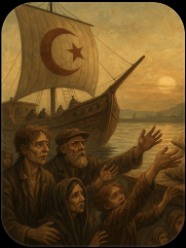
Ottoman aid and the Irish famine
4. An Ottoman Sultan Saves the Irish Population
This chapter examines the Ottoman Empire’s reported assistance to Ireland during the Great Famine of 1847, when widespread hunger devastated the country. Van Klaveren recalls that approximately one million people died and another million emigrated during the famine.
According to his account, Ottoman Sultan Abdulmejid I was moved by the suffering of the Irish population and by the Islamic teaching that a believer should not remain satisfied while a neighbour goes hungry. He decided to provide financial assistance and send food and medical supplies.
Van Klaveren says that Queen Victoria objected to the Sultan giving more money than the British contribution, prompting him to reduce the publicly stated amount. He then recounts that Ottoman ships secretly carried provisions to Ireland, ultimately reaching Drogheda after their original route to Dublin was reportedly obstructed.
The interview connects this episode to the Irish town’s continuing historical associations with Turkey. Williams and van Klaveren mention Drogheda United football club, whose nickname is “the Turks” and whose badge features a crescent and star.
For van Klaveren, the story illustrates an act of solidarity motivated by religious conviction at a time when Ireland was experiencing devastating hardship.
Central message: Islamic charitable principles inspired an act of humanitarian assistance to a predominantly Christian population in one of Ireland’s darkest periods.
Editorial note: The Sultan’s assistance and the details of the alleged British obstruction are historical claims that should be checked against archival and scholarly sources before being presented as settled fact.
Water management and agriculture in al-Andalus
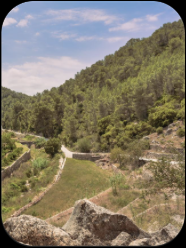
5. Ibiza Made Fertile by Islamic Irrigation
This story looks at the agricultural legacy associated with Muslim rule in Iberia, especially irrigation and water management. Such systems helped shape landscapes and farming practices whose influence can outlast the political regimes that introduced or developed them.
Vlad the Impaler and Ottoman-era conflict
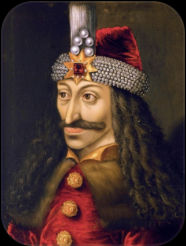
6. Dracula Stopped by Muslims
This chapter explores the historical figure behind the Dracula legend, Vlad, and his relationship with the Ottoman Empire.
The author explains that Vlad and his brother Radu were sent to be raised in the Ottoman Empire as part of an arrangement between their father and the Sultan. Radu adapted to his surroundings and converted to Islam, while Vlad became hostile towards the Ottomans.
Vlad later refused to pay the tribute owed to the Ottoman Empire and committed brutal acts against Ottoman representatives and others. The author recounts stories of Vlad's extreme cruelty, including the execution of prisoners by impalement.
He says that Vlad was eventually defeated and killed in 1476, with Radu and Mehmed II playing roles in bringing his rule to an end.
The chapter's central argument is that Muslim forces helped end the tyranny of one of Europe's most brutal rulers, offering a historical perspective that contrasts with popular portrayals of Dracula.
Dutch colonialism and Muslim history in South Africa
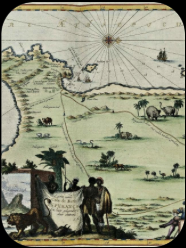
7. The Netherlands Unintentionally Brings the First Qur’an to South Africa
This story explores Dutch colonial history and the movement of Muslim people and texts to South Africa. It points toward the role of colonial networks, exile, and migration in the formation of Muslim communities far from their places of origin.
Goethe and Islamic literature
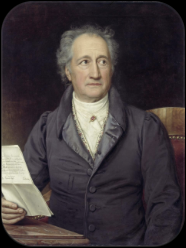
8. Was the German Poet Goethe Muslim?
Goethe’s interest in the Qur’an, Arabic literature, and Persian poetry provides the starting point for a discussion of European engagement with Islam. Intellectual curiosity and admiration for Islamic literary traditions are not, by themselves, proof that someone formally converted to Islam.
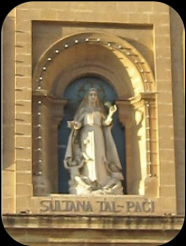
Muslim-era legacies in Malta
9. Catholic Malta: Allah, Eid and Mawlid
The chapter considers traces of Malta’s Muslim past in its language and culture. Maltese history illustrates how periods of Muslim rule can leave linguistic and cultural legacies even after a society’s religious and political character changes.
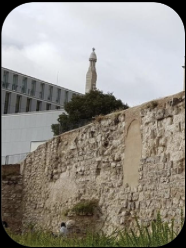
Madrid and al-Andalus
10. Madrid Founded by a Muslim Prince
This story examines Madrid’s origins in the period of Muslim rule in the Iberian Peninsula. It situates the modern Spanish capital within the history of al-Andalus and the networks of settlement, defence, and government that shaped medieval cities.
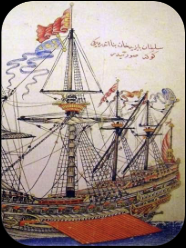
Ottoman sailors and Dutch resistance
11. Ottoman Sailors Saved by the Dutch Resistance
The chapter describes an encounter between Ottoman sailors and Dutch resistance fighters. It highlights the possibility of practical alliances across religious and political lines during the long struggle between the Dutch rebels and Habsburg Spain.
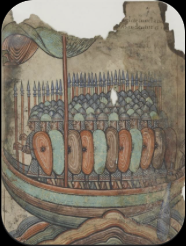
Viking networks and the medieval Muslim world
12. Muslim Vikings from Spain and Russia
This story explores contact between Viking-era societies and Muslim regions through trade, travel, and cultural exchange. The title is provocative; claims about particular Vikings’ religious identities should be assessed against the specific historical evidence presented.
A Scottish connection to Medina
13. Governor Medina Came from Scotland
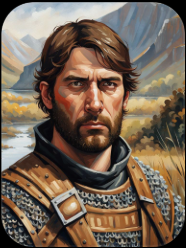
This chapter tells the story of Thomas Keith, a Scottish man from Edinburgh who became Muslim and took the name Ibrahim Agha.
The author says Keith was captured during a British military expedition to Egypt in 1807. While imprisoned, he was treated well and became interested in Islam. He studied the religion and eventually converted.
He subsequently served the Ottoman Empire and became governor of Medina at the age of approximately 22.
According to the author, Keith was killed during fighting involving groups challenging Ottoman rule. His story demonstrates, for the author, how a man born in Scotland could become a Muslim and rise to a significant position in the Islamic world.
Jan Janszoon and Murat Reis
14. Jan Janszoon Becomes Murat Reis
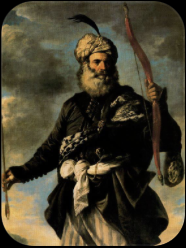
Jan Janszoon was a Dutch sailor who became associated with North African corsairing and adopted the name Murat Reis after converting to Islam. His life illustrates how Mediterranean conflict could produce dramatic changes in allegiance, identity, and political affiliation.
Early Muslim contacts in central Europe
15. Islam in Tenth-Century Switzerland
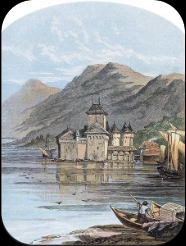
This chapter explores claims about early Muslim connections with the territory that is now Switzerland. Because early medieval presence and contact can be difficult to establish, the evidence for specific events and dates is important to the story.
Sport, personal faith, and Soviet history
16. The Soviet Union’s Goalkeeper Always Carried a Qur’an
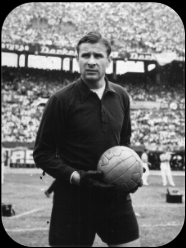
The chapter links Islam with a celebrated Soviet-era goalkeeper. It uses an individual life to explore the place of religious identity in a society whose official ideology was generally hostile to organised religion.

The croissant and cross-cultural food history
17. No Islam, No Croissant
This story proposes a connection between the croissant and cultural exchange involving the Islamic world. Food histories often blend legend, migration, and changing recipes, so the exact origin story should be distinguished from broader influences on European food culture.
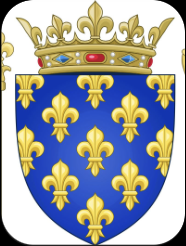
French symbolism and Islamic influence
18. France’s National Symbol Is Islamic
The chapter investigates a proposed Islamic connection to a French national emblem. It encourages readers to look at how symbols travel between cultures, while checking whether the particular historical link is supported by documentary evidence.
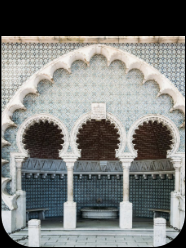
Portugal’s Andalusi heritage
19. Islamic Influence on Portugal
This story surveys the legacy of Muslim rule in Portugal, potentially including vocabulary, agriculture, architecture, and everyday culture. The broader history of al-Andalus shows how cultural influence can persist long after political control ends.
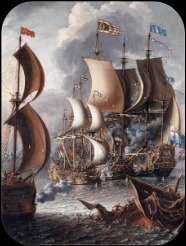
Piracy, corsairs, and the Muslim maritime world
20. Jack Sparrow Was Muslim
This chapter concerns the historical English pirate Jack Ward, whose story the author connects to the fictional character Jack Sparrow.
Born into a relatively poor family, Ward became a pirate and operated in North Africa, eventually developing a relationship with a Muslim governor in Tunisia named Uthman.
The author recounts that Ward sought protection in Tunisia after being refused a pardon by the English king. He was impressed by Uthman's honesty and his commitment to keeping promises, which Uthman explained through his Islamic faith.
According to the author, Ward was so impressed by this integrity that he studied Islam and converted, taking the Muslim name Yusuf Reis. The author notes that historical accounts of Ward's conversion existed but that this aspect of his story has not been incorporated into the popular Hollywood portrayal of pirates.
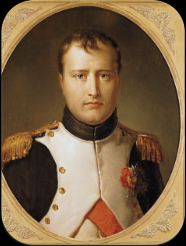
Islamic jurisprudence and the Napoleonic Code
21. Napoleon’s Legislation Was Based on Sharia
This chapter argues that elements of French and European legal systems have roots in Islamic jurisprudence.
The author recounts Napoleon's 1798 expedition to Egypt, during which he became impressed by aspects of the existing legal system. He says Napoleon brought elements of Maliki jurisprudence back to France and incorporated them into what became known as the Napoleonic Code.
According to the author, the resulting legal system influenced countries including the Netherlands, Belgium, Luxembourg, parts of Germany, Poland, and Italy.
The author also discusses the Lafi system, which he describes as having roots in Maliki Islamic jurisprudence. He connects this system to the development of trial by jury, arguing that it was adopted in Sicily and subsequently brought to England before spreading to countries such as the United States, Canada, Australia, and New Zealand.
His broader point is that Islamic legal traditions have influenced Western institutions, even where that influence is not widely recognized.
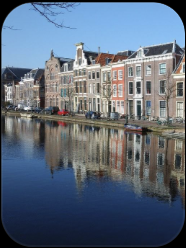
Early Muslim worship in the Netherlands
22. A Mosque in the Netherlands as Early as 1610?
The chapter investigates a claim about an early Muslim place of worship in the Netherlands. It raises wider questions about the visibility of Muslim residents, diplomatic visitors, and religious practice in early modern Europe.
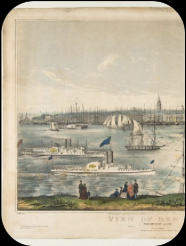
Moroccan-Dutch connections to Brooklyn
23. Brooklyn Developed by a Moroccan-Dutch Muslim
This story follows a person described as having Moroccan-Dutch Muslim connections and a role in Brooklyn’s development. It places local American history in the context of migration and the often-overlooked presence of people from Muslim backgrounds.
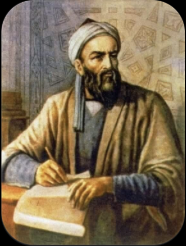
Ibn Khaldun and economic thought
24. Not Adam Smith but Ibn Khaldun: The Father of Economics
The chapter highlights Ibn Khaldun, the fourteenth-century North African historian whose analysis of taxation, labour, social cohesion, and political power remains influential. Rather than treating intellectual history as the work of one founder, it invites comparison across traditions and eras.
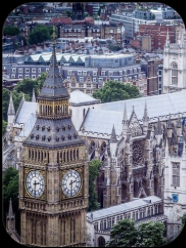
Architecture and cross-cultural exchange
25. Islamic Architecture at Notre-Dame and Big Ben
This story considers possible Islamic or wider cross-cultural influences on prominent European architecture. Architectural motifs can travel through trade, travel, scholarship, and conquest; particular claims need to be tied to identifiable designs and historical routes.
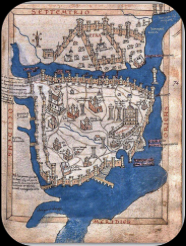
Byzantium, Islam, and historical terminology
26. A Historian Invented the Byzantine Empire Because of Islam
The chapter questions how historians named and described the Byzantine Empire and argues that Islam shaped that historical framing. It opens a discussion about how historical labels develop and how later scholars interpret the relationship between Byzantium and its Muslim neighbours.
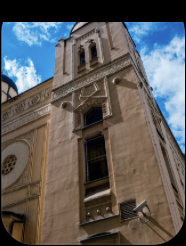
Muslim-Jewish history in Bosnia
27. The Oldest Synagogue in Bosnia Was Built by Muslims
This story explores Muslim-Jewish relations in Bosnia through the history of a synagogue. It points to the complex local histories of religious communities living alongside one another, while the specific claim about the building and its origins warrants checking against architectural and archival records.
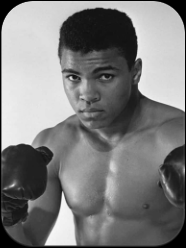
Muhammad Ali, Islam, and civil rights
28. The World’s Best Boxer Embraced Islam
The chapter focuses on Muhammad Ali, the heavyweight boxing champion whose conversion to Islam became a central part of his public identity. His story connects sport with faith, civil rights, political dissent, and personal conviction.
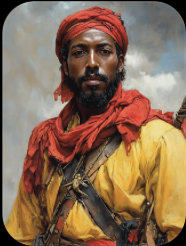
Estevanico and early Spanish expeditions
29. Mustafa Azemmouri: The First Muslim in America
This chapter examines the life of Mustafa Azemmouri, also known as Estebanico, a Moroccan Muslim and Arabic-speaking African who travelled to North America in the sixteenth century.
The author explains that Azemmouri was enslaved by a Spanish man and taken to Cuba before joining an expedition to Florida. After the expedition suffered severe losses, he escaped captivity with three other survivors.
The group travelled thousands of kilometres across North America towards Mexico. The author says Azemmouri was regarded by Indigenous communities as a medicine man and may have survived for many years afterwards, although the precise details of his later life remain uncertain.
The author emphasizes that Azemmouri was a Muslim who reached North America long before the arrival of English settlers and the establishment of the United States as a country.
He also points out that historical accounts often identify him as Estebanico without adequately acknowledging his Muslim identity.
William Henry Quilliam and Liverpool’s Muslim community
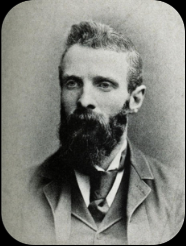
30. A British Convert Founded England’s First Mosque
The final story points to William Henry Quilliam, a British convert to Islam who established an early Muslim community and mosque in Liverpool in the late nineteenth century. His work forms part of the history of organised Muslim life in modern Britain.
Themes that connect the stories
1. Diplomacy and conflict
Several stories place Muslim powers and individuals within European political struggles—from Ottoman-Dutch contacts to the conflicts surrounding Vlad the Impaler. They show that alliances often crossed religious boundaries when political interests overlapped.
2. Knowledge, law, and ideas
The chapters on Goethe, Ibn Khaldun, and Napoleon raise questions about intellectual exchange. A careful historical account distinguishes documented influence from parallel ideas or later speculation.
3. Everyday culture and built environments
Stories about irrigation, Malta, Portugal, architecture, and food explore how cultural practices can endure and change over generations. These subjects are especially useful for examining the difference between a broad cultural legacy and a specific claim about origins.
4. People whose lives crossed boundaries
Jan Janszoon/Murat Reis, Mustafa Azemmouri/Estevanico, William Henry Quilliam, and Muhammad Ali illustrate very different forms of movement, conversion, and public identity.
5. Reading provocative history critically
An arresting title is an invitation to investigate, not proof by itself. To assess each claim, look for contemporary documents, specialist scholarship, clear definitions, and alternative interpretations. Be particularly careful with claims that a familiar European institution, symbol, food, or law has a single Islamic origin.
Conclusion
Hidden History invites readers to look beyond a simple story in which Islam and the West developed in isolation. Its 30 topics offer starting points for exploring diplomacy, migration, scholarship, art, religion, and everyday life across cultural boundaries. The most rewarding way to read the book is with curiosity—and with enough historical care to distinguish documented connections from claims that remain contested.
Suggested source and further reading
-
Joram van Klaveren, Vergeten Verleden (Dutch original). Consult the publisher’s book page and preview for the exact chapter titles and the author’s own argument.
-
Author’s other book is titled: Apostate.
-
For publication details and the book’s framing, consult the publisher’s official materials.
-
For individual historical claims, compare the book with academic histories and primary sources relevant to the specific person, event, or object.
-
Author was interviewed by the YT channel Blogging Theology on October 20, 2026.